Case study · Product · Side-project
Cronolix: football scouting, from raw data to a signing
A scout arrives with a rough longlist, filters and scores, compares profiles, shortlists a few, and generates the report. I build the whole SaaS end to end, starting with the analytics.

End-to-end
from data ingestion to insights, solo
By role & league
percentiles and benchmarking vs. cohorts
Data → decision
reports for scouting and the coaching staff
Cronolix is a software studio, and its first product is a football scouting platform. It's where my two worlds meet: I'm Argentinian, I grew up playing and loving football, and now I get to bring data engineering and analytics to the recruitment side of the game.
The idea is to mirror a scout’s real workflow: they arrive with a rough longlist, filter and compare players on objective data, shortlist a few, and walk away with a report to present to any club. I build the whole data & insights function end to end — ingestion, scoring, visualization and reports — starting with the analytics.
The problem#
Traditional scouting turns hours of video and scattered data into a gut feeling that is hard to compare. How do you decide, with data, whether a player from another league fits your system and a specific role?
Cronolix takes a club’s own data together with physical & positional tracking data and turns it into comparable player profiles, scored against a cohort of the same role across several leagues.
From raw data to a signing#
The platform follows the scout’s real workflow, step by step, up to a report they can present to any club.
Ingest: I load the club’s data and the tracking data into the database, cleaned and normalized.
Score: every player gets scores and percentiles against their role across a cohort of leagues.
Explore & compare: the scout filters, sorts by metric, and compares profiles on radars (cognitive and physical).
Shortlist: they save the few players that fit.
Report: generate a scouting report — with AI assistance — ready to present.
How it is built#
I build the whole thing, layer by layer, and that is exactly what I want to show: I can structure and scale a data & insights function from zero to a multi-tenant SaaS.
Each club lands in its own branded explorer and only ever sees its own data — isolation is enforced by row-level security in the database, from day one. I load the data myself, offline, through an ingestion pipeline.
Data: Python/pandas ingestion pipeline → PostgreSQL, multi-tenant with RLS.
Backend: FastAPI; frontend: Next.js + React.
Visualization: an explorer with tables, filters, player detail, radars and shortlist; reports with charts (Recharts · Nivo · Plotly).
Modeling: scoring and percentiles by role and league.
Inside a real report: Andrada (Vélez) for Benfica#
This is a real slice of a Cronolix report — the tactical read — on Tobías Andrada, a midfielder at Vélez Sarsfield, evaluated for Benfica. Each chart crosses his data with his role’s pool and with the destination club’s incumbent.
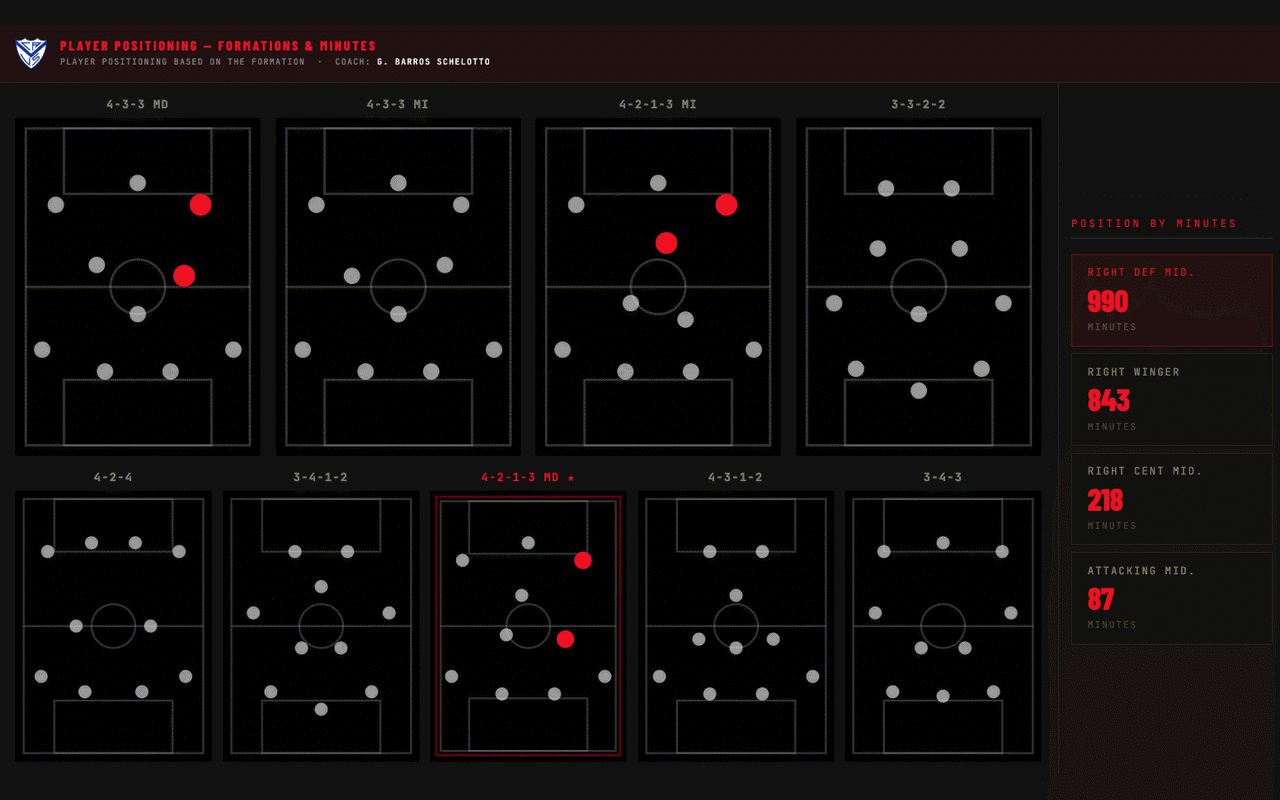
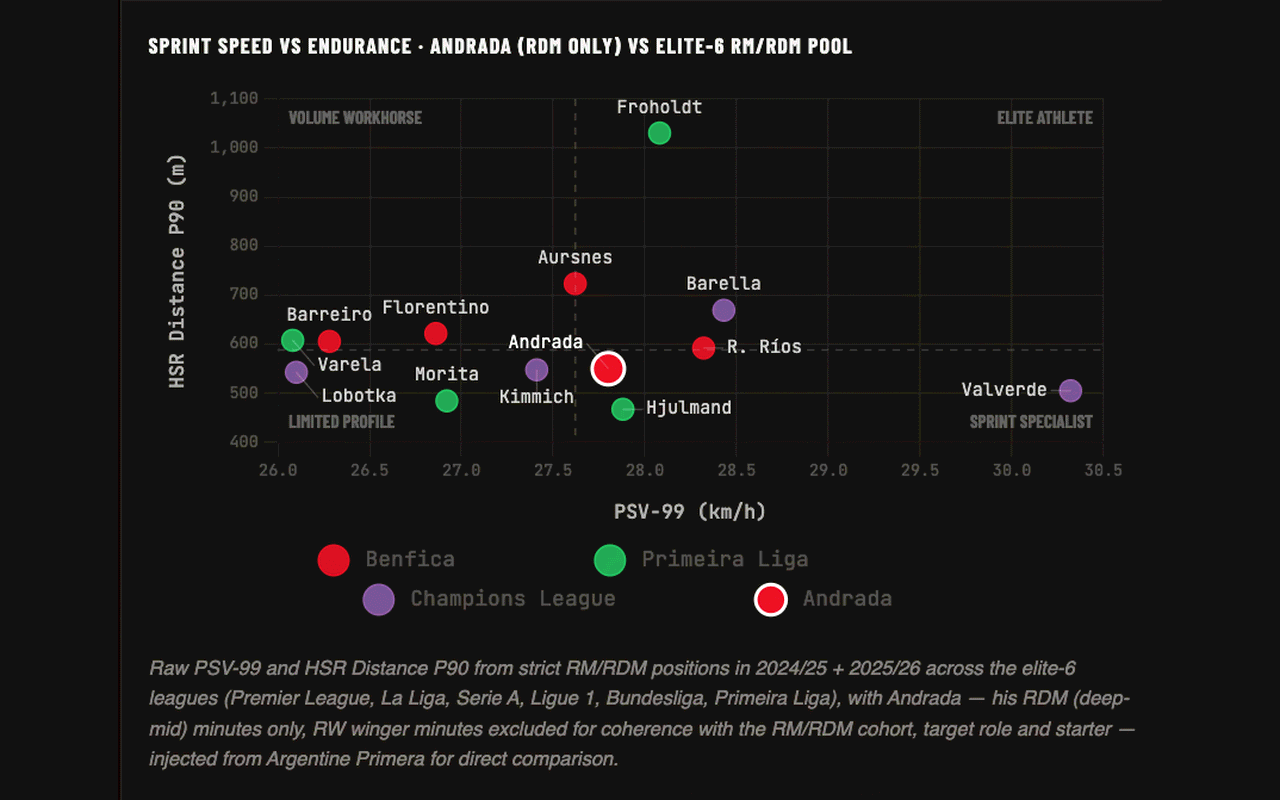
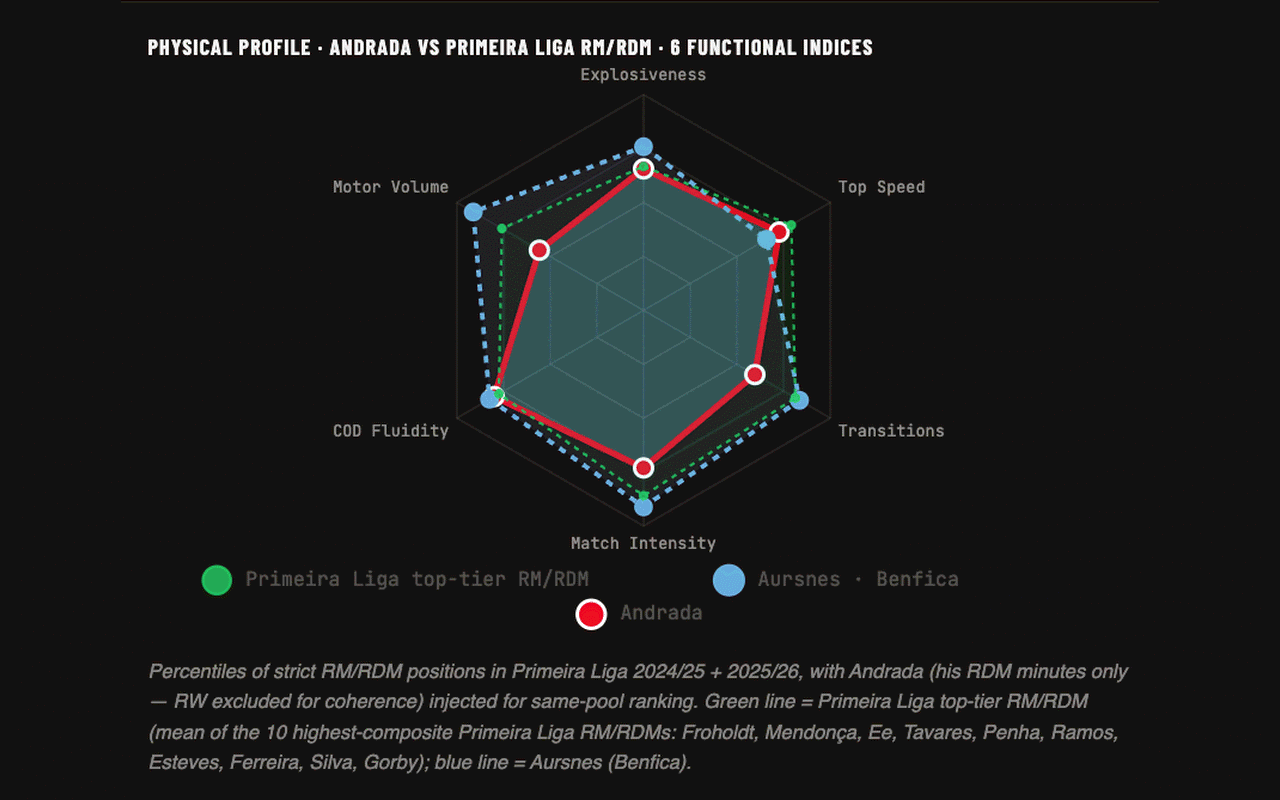
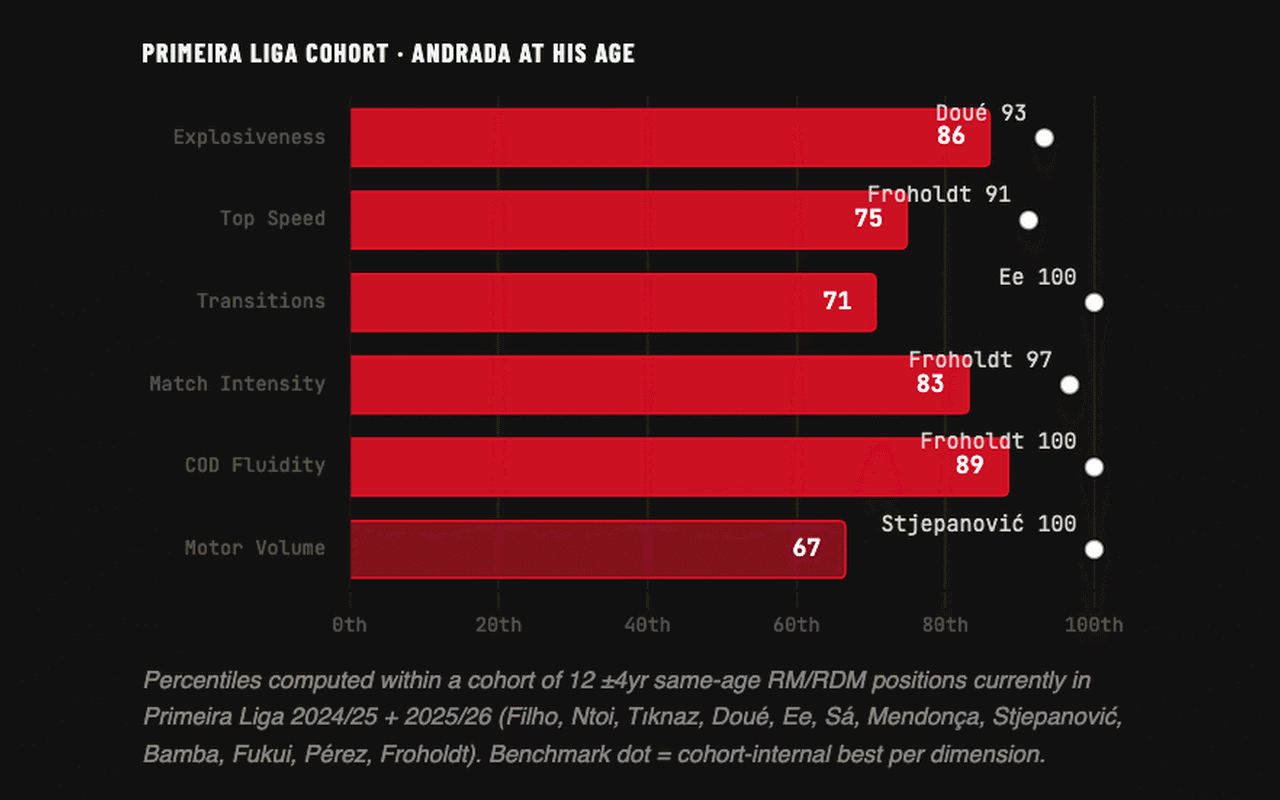
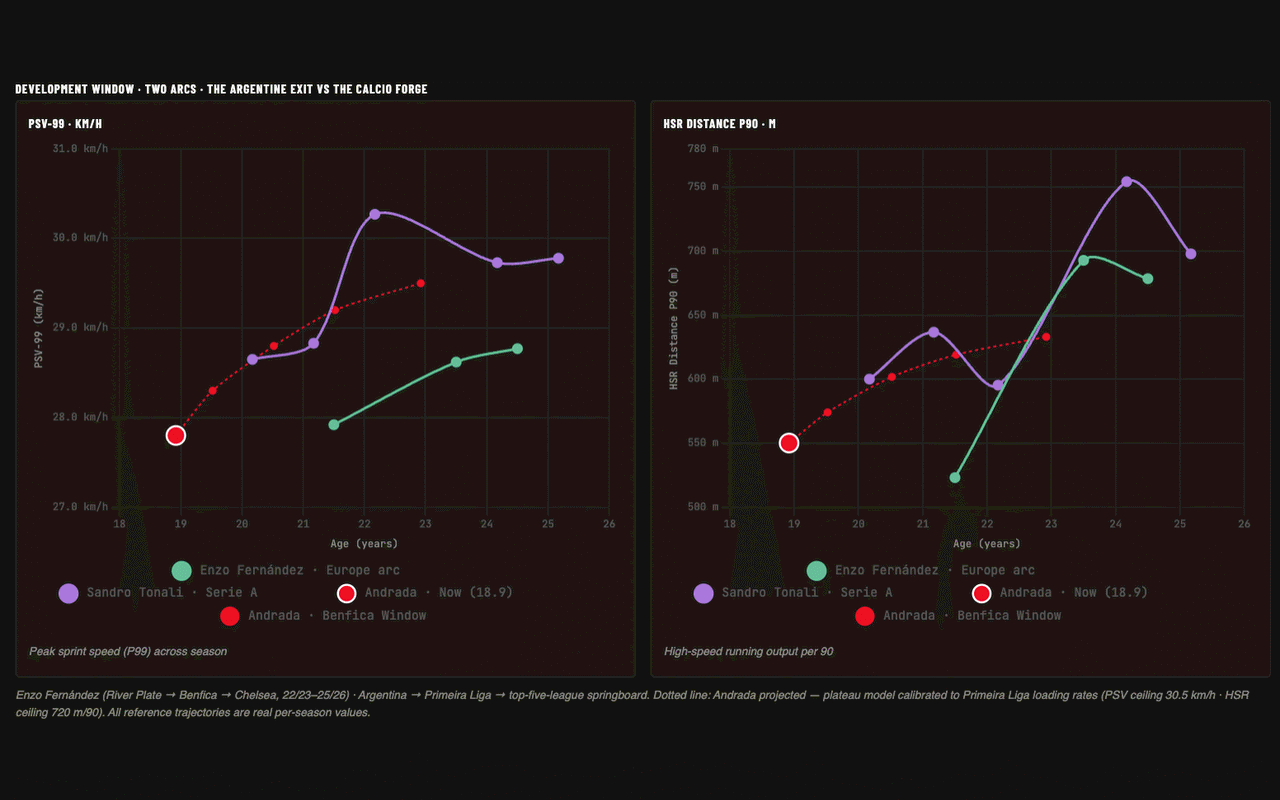
And this is only one part of the report. The full one adds context, video, environment, a value projection and a final verdict. Want to see the whole thing?
Stack#
Frequently Asked Questions#
What is Cronolix?
A software studio. Its first product is a football scouting and analytics platform: it turns a club’s data into comparable player profiles, scored by role and league, and into scouting reports.
What data do you work with?
I combine the club’s event data with physical & positional tracking data and normalize it into comparable profiles by role and league. Blending events, tracking and performance into a single read is the core of the platform.
Why a bioengineer working in football data?
I come from bioengineering and computer vision — mathematical rigor and machine learning — and I grew up with football. Cronolix is where I bring the two together: scientific method applied to a club’s decisions.
Talk data and football?
If you work in sports analytics or want to see inside Cronolix, get in touch.